
Why can a bedroom outfit look fine in a floor mirror while the face drops into shadow, or a neat LED strip appears as a hard white streak in the glass? The problem is usually not taste. The problem is that the lighting decorates the mirror surface instead of lighting the person vertically.
What lighting works best beside floor mirrors for faces and clothing?
For floor mirrors used in bedrooms, dressing rooms, bathrooms, closets, and fitting areas, the best lighting usually combines soft vertical light from both sides with controlled ambient light.
| Lighting layout | Shadow risk | Glare risk | Best use | Installation difficulty |
|---|---|---|---|---|
| Side lighting | Low when both sides are balanced | Medium if bare LEDs face the glass | Makeup, shaving, hair, outfit checks | Medium to high, because wiring and height matter |
| Overhead-only lighting | High under eyes, nose, chin, and collar | Low to medium unless the fixture reflects in the mirror | General room light, not primary mirror light | Low if ceiling wiring already exists |
| Indirect wall wash | Low to medium if it reaches the person | Low when the source is hidden | Soft dressing light and reduced contrast | Medium, because aiming and wall finish affect results |
| Adjustable accent lighting | Medium unless beams cross the face evenly | High if aimed into the mirror path | Retail fitting, display, flexible rooms | Medium |
| Plug-in lamps | Medium, often uneven | Medium to high if shades or bulbs reflect | Rentals, temporary dressing zones | Low, but placement is critical |
Side lighting is usually better than one ceiling light for floor mirrors
Side lighting works because floor mirrors need vertical light on the person, not only downward light on the floor. A single ceiling downlight can make the outfit look lit while the face falls into a small cave of shadows below the brow, nose, lips, and chin.
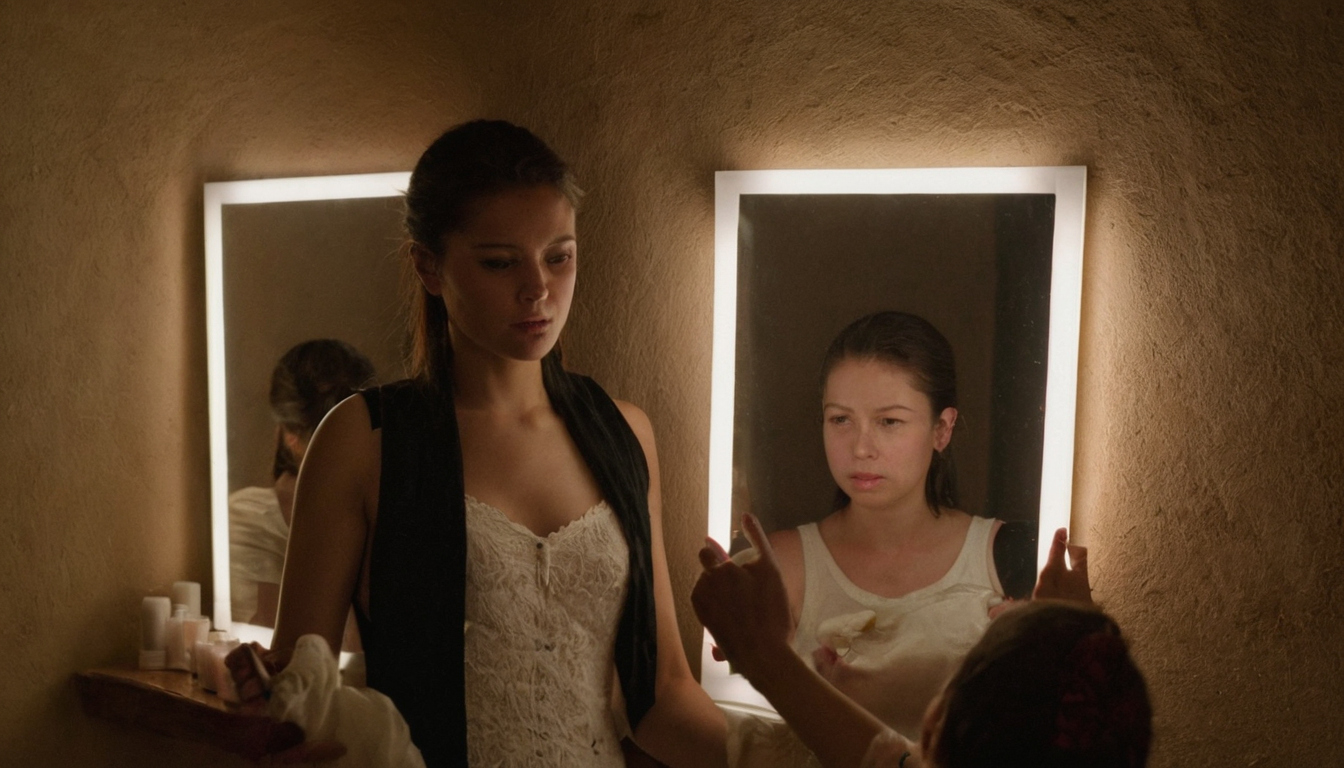
What lighting works best beside floor mirrors for faces and clothing shown with practical context cues.
For practical specification, treat the face and torso as the task plane. Residential dressing often works with moderate vertical light at standing face height and upper-body height, while makeup, shaving, and close grooming need stronger, smoother light with dimming. A typical standing viewer checks a full-length mirror from about 2 to 4 feet away, so the light must reach the person at that distance rather than brighten only the mirror frame.
LED fixtures make sense for long-use dressing zones because ENERGY STAR states that qualified LED lighting uses at least 75 percent less energy and lasts up to 25 times longer than incandescent lighting, where qualified LED products apply. The saving is useful only if the fixture also has good diffusion, compatible dimming, and color quality.
Floor mirrors need light on the person, not just light on the mirror
A hot spot is the bright dot, strip, or glowing tube that appears in the glass. Reflected glare is the discomfort from seeing that bright source in the mirror. A veiling reflection is the pale sheen that washes over clothing texture, similar to trying to read a phone screen under a window reflection.
Color science matters after the light lands in the right place. The U.S. Department of Energy Solid-State Lighting Program and the Illuminating Engineering Society presented the TM-30-15 webinar; the transcript identifies Michael Royer as a Pacific Northwest National Laboratory lighting engineer and chair of the IES Color Metrics Task Group responsible for developing TM-30, and Kevin Houser as a Penn State architectural engineering professor, IES Lighting Handbook editor, and IES fellow. That level of color discussion helps during procurement, but placement comes first.
The next decision is more physical: where the side fixtures sit beside floor mirrors so the face receives light without turning the glass into a reflected light box.
Where should lights sit beside floor mirrors to avoid face shadows?
Lights beside floor mirrors should sit near face height, evenly on both sides, and slightly forward of the mirror plane when the room layout allows it.
Put vertical fixtures near the face zone, not only at the mirror top
Vertical fixtures work best when their lit length crosses the face zone rather than stopping above the head. For many adults, standing eye height falls roughly between 55 and 67 inches from the finished floor, so a useful sconce or linear fixture often runs through that band, for example from about chest height to slightly above eye height.
- Risk: a light only above the mirror throws nose, brow, and chin shadows downward.
- Better placement: set side fixtures about 4 to 12 inches from the mirror edge where the wall width allows.
- Check first: confirm door swings, wardrobe pulls, towel rails, vanity edges, and walkways before fixing electrical boxes.
Use two-sided lighting when the floor mirror is for makeup, shaving, or hair color
Two-sided lighting gives the face a left and right fill, which matters more for grooming than for a decorative hallway mirror. The goal is not brightness on the glass. The goal is even vertical light on skin, hair, and the upper body while the person stands in the normal viewing position.
- Use matched fixtures on both sides for makeup, shaving, hair styling, and outfit checks.
- Keep fixture heights and lamp specifications the same so one cheek or sleeve does not read warmer or darker than the other.
Use one-sided lighting only when space or wiring prevents symmetry
One-sided lighting can work in rentals, narrow bedrooms, or closet returns, but it needs softer output. Choose a diffused fixture, add ambient fill from the ceiling or opposite wall, and avoid placing the light behind the mirror plane where the body blocks it. Once position solves shadows, the next risk is the bright source reflected back as a hot spot.
How do you prevent hot spots and glare in floor mirrors?
Hot spots in floor mirrors happen when the viewer sees a bright lamp, LED strip, bare diode, or concentrated beam reflected in the glass, so the fix is to control brightness, shielding, beam angle, and fixture position before the wall is closed.
- Choose diffusion first: reject any fixture that shows individual LED dots from the normal standing position.
- Check the reflection path: stand where the user will stand and look for the lamp in the mirror, not just on the wall.
- Control contrast: a small bright source in a dark reflected room causes more discomfort than a larger, softer source in a gently lit room.
- Watch glossy finishes: polished tile, gloss paint, glass shelves, chrome fittings, and dark reflective cabinetry can multiply glare around floor mirrors.
Shield the light source so the mirror reflects glow, not bare LEDs
Fixture selection should start with the lens and shielding, not the trim color. Look for opal lenses, frosted diffusers, recessed LED channels, baffled downlights, or wall washers with controlled optics. Manufacturer data worth checking includes lens type, diffuser opacity, beam angle, lumen output, and candela distribution, which describes where the strongest light is sent.
Aim adjustable lights away from the mirror’s direct reflection path
Adjustable spots and track heads can work beside floor mirrors if the beam lands on the person or an adjacent wall surface, not into the glass. Treat the mirror like a billiard cushion: a light aimed into the mirror will bounce toward the viewer at a matching angle. Broad beams usually suit close wall washing better than narrow accent beams, which create sharp white marks.
Lower contrast with dimming and ambient fill
Dimming helps only when the LED driver, wall dimmer, smart control, and low-voltage system are compatible through the useful low range. Add soft ambient fill so the reflected room is not black behind one bright fixture. If glare control involves new paint, adhesive channels, sealants, or other products that emit fumes indoors, the U.S. Environmental Protection Agency recommends increasing ventilation during product use. Once brightness is controlled, the next decision is whether the light shows skin tone, hair color, and fabric accurately.
What color temperature and color rendering should floor mirror lights use?
Floor mirror lights should be specified for color quality as carefully as brightness when the area is used for makeup, clothing, hair, or material selection. A warm-to-neutral white source with strong color rendering is usually safer than very cool or low-quality LEDs in homes, boutiques, bathrooms, and dressing rooms.
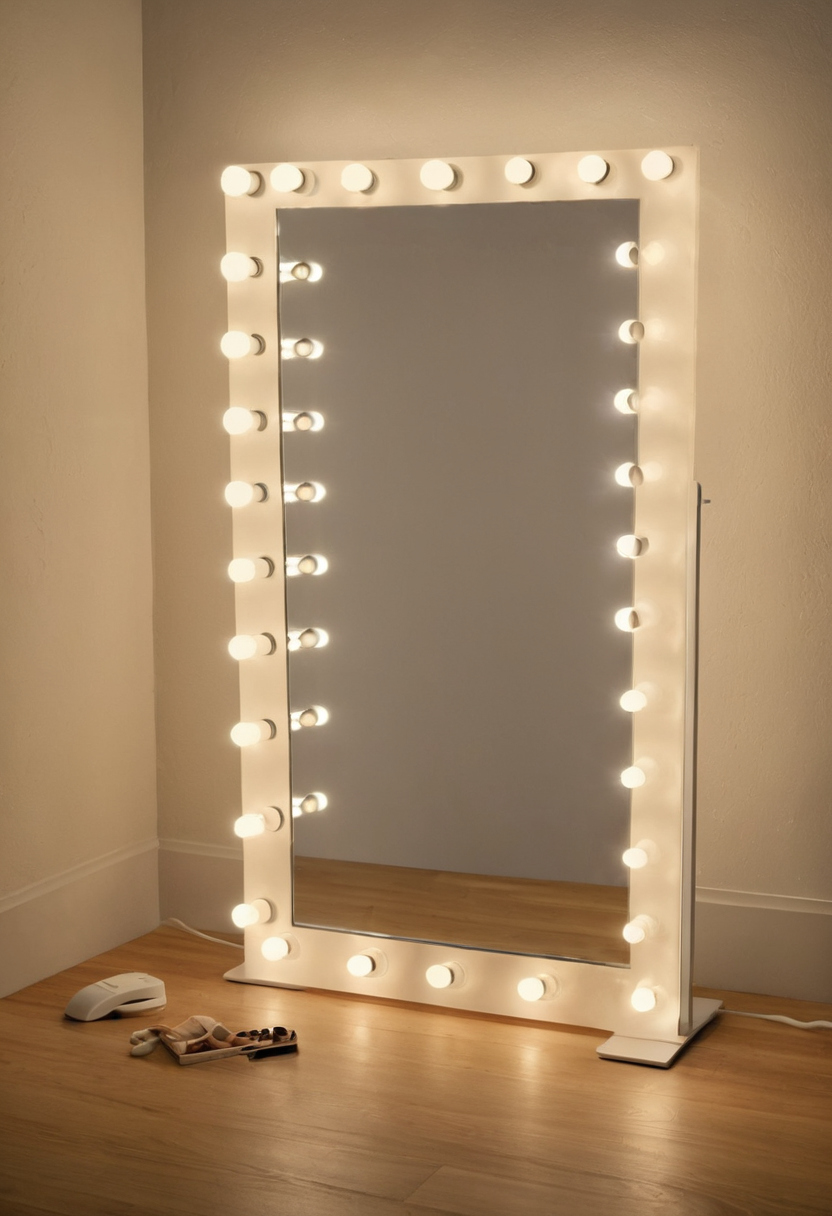
What color temperature and color rendering should floor mirror lights use shown with practical context cues.
Choose high color rendering for skin tone and fabric accuracy
Color temperature describes whether the light looks warm, neutral, or cool. For most residential floor mirrors, specify about 2700K to 3500K: 2700K to 3000K suits bedrooms and warm wardrobes, while 3000K to 3500K gives bathrooms and dressing areas a cleaner read without turning skin gray. Retail fitting rooms and fabric review areas can move toward 3500K to 4000K if the surrounding store lighting uses the same range.
Color rendering describes whether the light shows colors faithfully. For makeup, hair color, skin tone, black versus navy fabric, white paint, and warm metals, use CRI 90 or higher as a practical minimum and ask for stronger red rendering when cosmetics or hair color matter. A cheap low-CRI LED can make foundation look correct at the mirror and wrong by the window.
CRI is not the whole color story. The U.S. Department of Energy describes TM-30-15 as an IES method for evaluating light source color rendition, which helps compare fidelity and saturation beyond a single CRI number. For specification work, request CRI, CCT, and available TM-30 data before ordering linear sconces or LED tape.
Match the floor mirror lighting to the room’s real use
| Mirror use | Safer CCT range | Color quality target |
|---|---|---|
| Decorative bedroom mirror | 2700K to 3000K | CRI 90 preferred |
| Daily dressing mirror | 3000K to 3500K | CRI 90 or higher |
| Makeup or shaving station | 3000K to 3500K | CRI 90 or higher, strong red rendering |
| Hair color or retail fitting | 3500K to 4000K | High CRI plus TM-30 review where available |
Consistency matters as much as the number on the box. Match the floor mirror lighting to closet lighting, nearby daylight, and the room where the outfit will actually be seen. If the mirror zone also supports finish selection after renovation, remember that the U.S. Environmental Protection Agency identifies paints, varnishes, waxes, cleaning products, building materials, and furnishings as common indoor sources of volatile organic compounds, so color approval belongs in the same procurement conversation as finishes and ventilation. Once the color target is clear, the next decision is which fixture type can deliver that light without glare.
Which fixture types work beside floor mirrors, and when should each be used?
The best fixture type beside floor mirrors depends on wiring access, wall width, ceiling height, mirror style, budget, and whether the project is a new build, remodel, or rental upgrade. Linear sconces, concealed LED channels, wall washers, picture-style lights, track lighting, and portable lamps can all work if glare and color quality are controlled.
Linear sconces are the most direct solution for permanent dressing zones
Hardwired linear sconces suit planned dressing walls because the electrician can place boxes, blocking, switches, and dimmers before wall closure. Choose a diffused vertical lens, not exposed LED dots, and size the fixture to cover the face and upper torso zone rather than only the mirror crown. This option usually has a higher installation cost but the cleanest control.
Wall washers and ceiling fixtures work when the beam is broad and controlled
Ceiling wall washers, broad-beam track heads, and concealed LED channels help when the mirror wall has no side width. The beam should skim the person and wall softly, not punch a narrow cone onto the forehead. Avoid a single tight downlight directly above the viewing position because the nose, brow, and chin create the shadows the mirror then exaggerates.
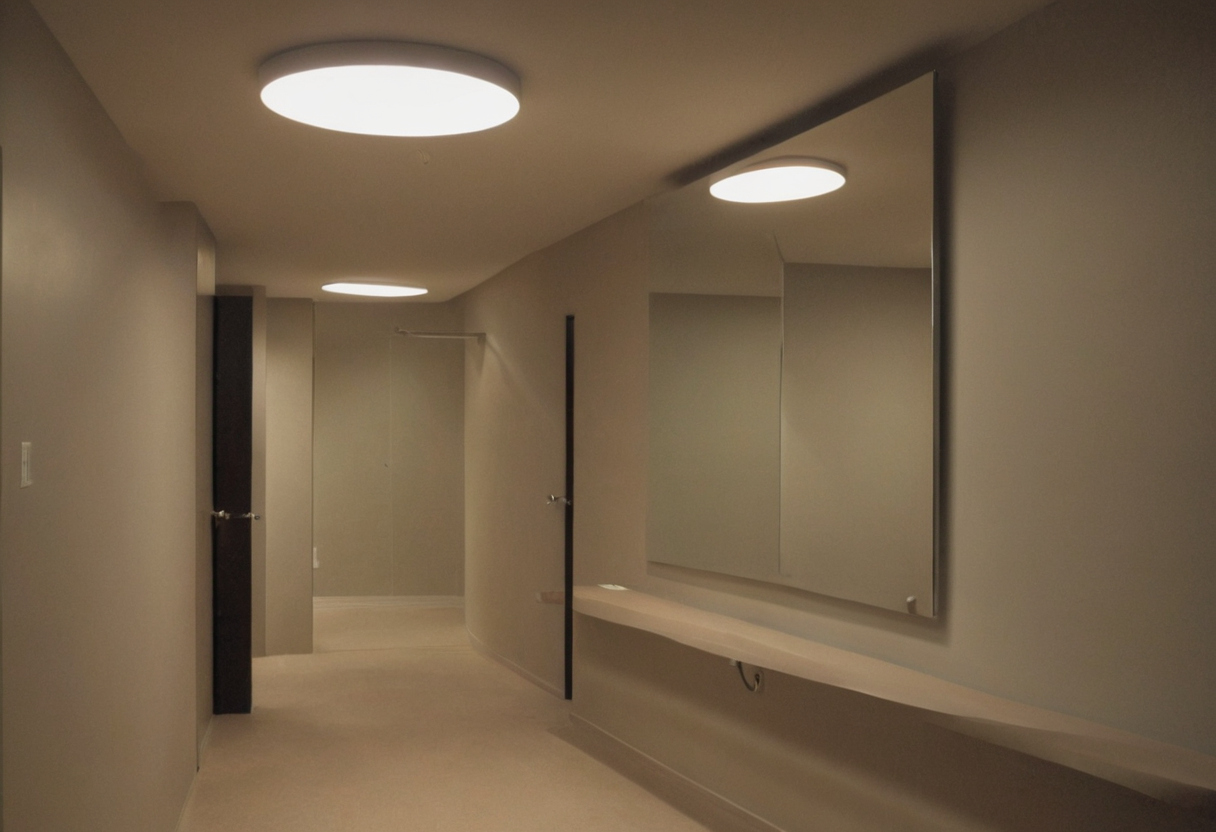
Which fixture types work beside floor mirrors, and when should each be used shown as an editorial planning reference.
Plug-in and portable lighting can improve rentals but needs careful placement
Plug-in sconces, diffused floor lamps, and rechargeable lights belong in the low-disruption budget category, but cord routing and bathroom safety decide whether the idea is acceptable. Keep portable lamps away from wet areas, use fixtures rated for the room condition, and ask a qualified electrician before adding plug-in lighting near basins, tubs, or showers. Once the fixture family is chosen, the next decision is sequencing: measure, wire, mount, test, and only then sign off the floor mirror position.
What is the correct workflow for planning lighting beside floor mirrors?
Lighting beside floor mirrors should be planned before final mirror placement, electrical rough-in, wall finishes, and cabinetry are fixed. Fixture boxes, switches, dimmers, blocking, outlet locations, and mirror clearances become difficult or expensive to change after walls are closed.
Measure the person, mirror, wall, and sightline before choosing fixtures
Start with a marked wall, not a product image. Record mirror height and width, viewer distance, eye-height range, wall width, ceiling height, nearby doors, outlets, switches, wardrobes, and reflective finishes. The homeowner, designer, electrician, millworker, tile installer, and mirror supplier should review this layout before ordering. Temporary work lights can reveal nose shadows and reflected streaks before hardwiring.
Confirm electrical, dimming, and bathroom safety requirements before purchase
Electrical planning should confirm local code, bathroom zones, receptacle protection, fixture location ratings, driver access, and dimmer compatibility before fixtures ship. Dry, damp, and wet ratings are not interchangeable near showers, tubs, laundry areas, or condensation-prone exterior walls. For damp rooms, the U.S. Environmental Protection Agency says condensation and wet or damp spots should be fixed promptly to prevent mold growth in its mold and moisture guide.
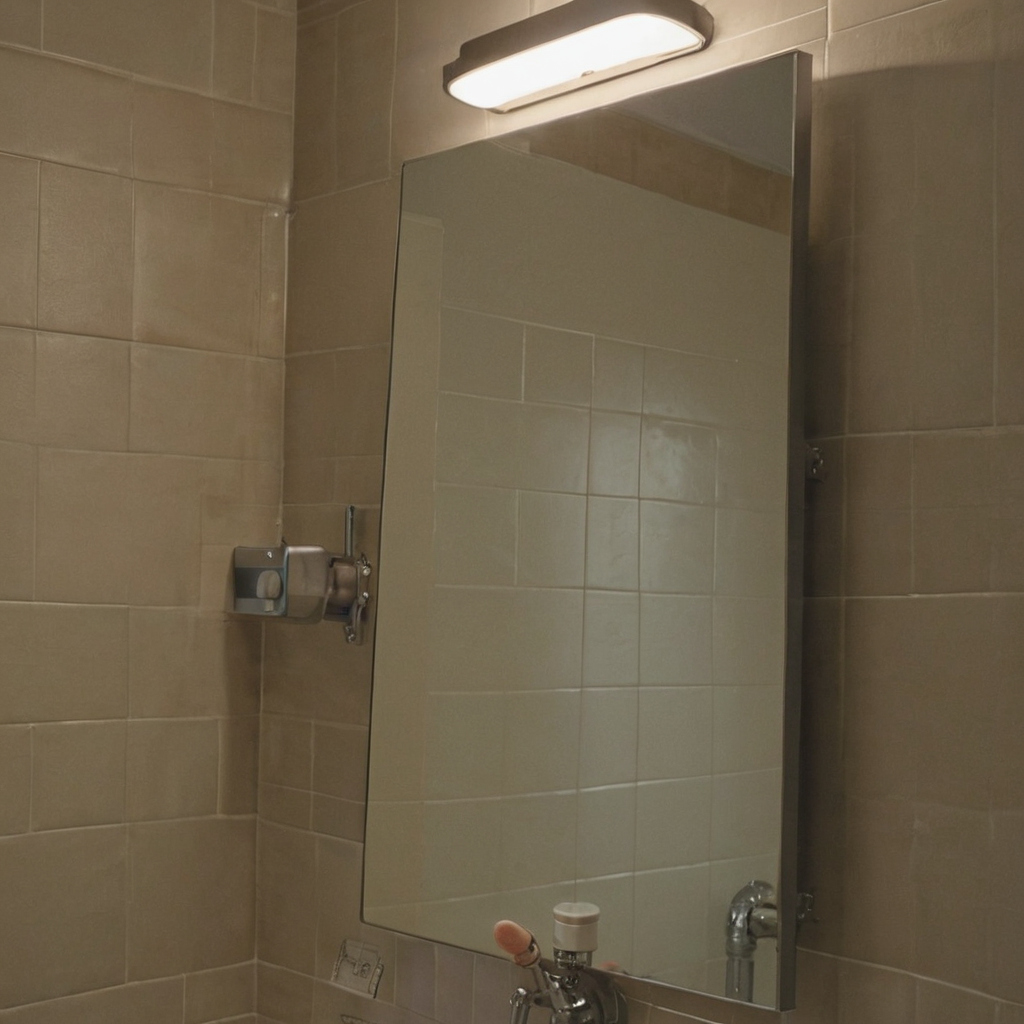
What is the correct workflow for planning lighting beside floor mirrors shown as an editorial planning reference.
Test the floor mirror lighting at night and in daylight before final sign-off
Commissioning should test the mirror zone in daylight, evening light, full output, dimmed output, standing close, standing back, and with doors or wardrobe panels open. Check face shadows, reflected hot spots, dimming smoothness, visible flicker, color mismatch between fixtures, and clothing color accuracy. The best workflow treats lighting placement as a rough-in decision, not an accessory decision after the mirror arrives.
FAQ
Floor mirror lighting is easiest to correct before wiring, mirror mounting, and finish approval, but these rules also help with rental and retrofit decisions.
How do you make lighting beside floor mirrors more flattering for faces?
Use soft vertical light from both sides of the mirror, place the lit area near standing face height, and add gentle ambient light so one bright source is not reflected against a dark room.
Should lights go above a floor mirror or beside it?
Beside the mirror is usually better for grooming and dressing because side light fills the face more evenly. Above-mirror lighting can help with general brightness, but it should not be the only task light for faces.
What is the most flattering color temperature for floor mirror lighting?
Most homes work best around 2700K to 3500K. Warmer light suits bedrooms, while 3000K to 3500K often gives bathrooms, wardrobes, and dressing areas a cleaner read.
How do you stop a floor mirror from reflecting bright LED hot spots?
Choose diffused fixtures, avoid visible LED dots, aim adjustable heads away from the mirror’s reflection path, and test from the normal standing position before final mounting.
Can plug-in lights work beside a floor mirror in a rental or small bedroom?
Plug-in lights can improve a rental mirror zone if the fixture is diffused, the cord route is safe, and the light is kept away from wet areas. In bathrooms or near basins, tubs, and showers, ask a qualified electrician before adding plug-in lighting.